


No products in the cart.
Article
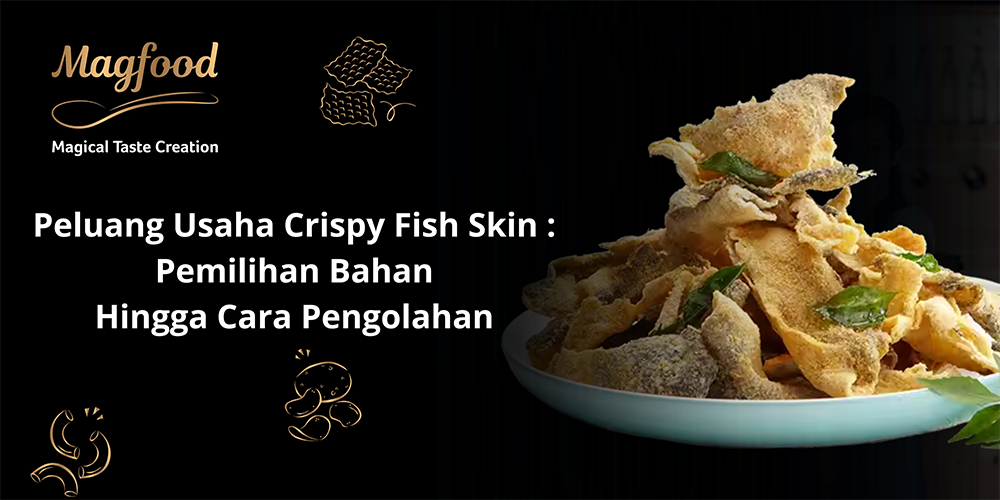
Crispy Fish Skin Business Opportunity: Selecting the Right Fish and Processing Methods
The seafood-based culinary business continues to experience rapid growth. One product currently on the rise and highly sought after by various demographics is the crunchy fish skin or fish skin snack. This snack is not only tempting in terms of its savory taste and crunchiness, but it also boasts a high selling value thanks to the protein and omega-3 content found in fish skin.
However, to thrive in a competitive market, business owners must deeply understand the technical aspects—ranging from raw material selection and types of fish, to processing methods and packaging strategies. This article will comprehensively review the step-by-step technical guide to producing highly marketable crispy fish skin, while discussing the challenges of using local ingredients and solutions to elevate your product’s value using Magfood seasoning powder.
The Market Potential of Crispy Fish Skin Snacks
Today’s snack market goes beyond ordinary junk food. Consumers are actively looking for healthy, savory, and unique snack alternatives. Crispy fish skin perfectly answers this demand. In Asian countries like Singapore, Malaysia, and Thailand, this product has long been booming and remains a favorite across all ages. Indonesia itself possesses remarkable marine wealth, making the crispy fish skin business highly potential for development.
The advantages of this product include:
- Abundant raw materials, especially in coastal areas.
- Value addition from waste—fish skin that is normally discarded can be processed into a premium product.
- A broad market share, appealing to the middle-upper class, children, and adults.
- Ideal for the export market as its flavor profile aligns with global snacking trends.
However, to produce a high-quality standard product, raw material selection is the ultimate key.
Fish Selection: Local vs. Imported Fish
The fish skin used for crispy fish skin snacks generally comes from specific species with thick skin that does not easily disintegrate during frying. The two most globally popular types are:
- Salmon
- Pros: Thick, elastic texture, and a high fat content that helps achieve maximum crunchiness. Its distinctive aroma is highly appealing to premium consumers.
- Cons: Expensive and classified as an imported raw material. Availability heavily relies on overseas supply.
- Dory
- Pros: Relatively thick skin and easy to process. It is widely used by home industries due to its stable texture.
- Cons: Fairly high price and sometimes difficult to source in large quantities with uniform quality.
- Local Fish Species
Several local fish species are also utilized in the crispy fish skin industry, such as Pangasius (Patin), Tilapia (Nila), Gourami (Gurame), and Milkfish (Bandeng). However, local fish come with their own set of pros and cons:
- Pros:
- Abundant availability, especially in regional fishery centers.
- More affordable prices, making it suitable for SMEs (UMKM).
- Distinctive local taste that can be positioned as a unique product selling point.
- Cons:
- Thinner skin, making it prone to breaking during frying.
- Stronger fishy odor, requiring special handling during the marination and odor-removal processes.
- Lower fat content, which can result in a less crunchy final product.
- Inconsistent quality, depending on the season and fishing conditions.
- Rough skin fibers; not all local fish have a pleasant bite texture.
Despite these challenges, local fish can still be a top choice if processed correctly, right from the pre-production stage down to packaging.
Crispy Fish Skin Processing: From Raw Material to Ready-to-Sell Product
To produce a crispy, savory, and highly marketable crispy fish skin, proper processing is required. Here are the systematic and hygienic processing steps:
- Selection and Sorting
The crucial first step is selecting the fish skin. It must come from fresh, thick-fleshed fish. Dory, salmon, or pangasius are popular choices for their elastic texture and neutral aroma. For local fish like milkfish and tilapia, extra care is needed as their skin is thinner and tears easily. Sort the skin to ensure there are no holes, excessive slime, or thick remaining meat attached. Excessively thin or dark-colored skin should be discarded as it will disintegrate during frying. - Washing
Wash the sorted skin under clean, running water to remove residual blood, slime, and dirt. A soft food-grade brush can be used to gently clean the inner side. This step significantly reduces potential fishy odors. For small scales, manual washing is sufficient; for larger scales, a washing drum is more efficient. - Soaking (Odor Neutralization)
Soak the clean skin in a solution designed to neutralize fishy smells and enhance the natural aroma. This solution typically consists of water, salt, and lime juice or vinegar. Adding sliced ginger, lemongrass, or kaffir lime leaves provides a fresh scent. Soak for 30 to 60 minutes, then rinse again with clean water. - Blanching
Blanching kills bacteria and partially cooks the skin structure, making it more elastic for frying. Briefly boil the skin (2-3 minutes) in water containing a pinch of salt, bay leaves, and sliced ginger. Immediately plunge the skin into ice water to halt the cooking process and maintain its chewy texture. This also reduces excess subcutaneous fat, preventing heavy splattering later. - Dehydration (Drying)
This is a critical step. Moist fish skin cannot be fried immediately—it will splatter aggressively in hot oil and yield a soggy product. Method 1: Sun-dry for 5-6 hours on mesh racks covered with gauze to protect against dust and insects. Method 2 (More hygienic and consistent): Use an oven or food dehydrator at 60–70°C for 3-4 hours. The goal is to achieve completely dry skin before frying. - Marination (Optional)
To infuse a basic savory flavor, briefly soak the dried skin (15-30 minutes) in a light marinade of water, salt, garlic powder, and broth powder. Briefly dry it again so it isn’t too wet for frying. Many producers skip this step, preferring to add flavor entirely through post-fry seasoning powders. - Frying
Frying is the core step to achieve that perfect crispy texture. Fry the skin in stable hot oil between 170–180°C. Use plenty of oil or a deep fryer so the skin is fully submerged. Fry in small batches to prevent sticking. Frying usually takes less than a minute—just until the skin blooms and turns golden. It is done when the bubbling stops and the skin feels stiff. Use high-quality oil (like pure palm or corn oil) to prevent rancidity. - De-oiling
Immediately drain the fried fish skin to remove excess oil. Place them on a metal strainer lined with oil-absorbing paper. For large-scale production, a vacuum spinner or oil remover is highly recommended to ensure the product stays crunchy and doesn’t get soggy. - Cooling
Let the drained product cool at room temperature for 15 to 30 minutes. This is crucial before seasoning; if the skin is too hot, the seasoning powder will clump and fail to adhere evenly. Ensure the product is completely dry and free from steam. - Seasoning Coating
Once cooled, toss the fish skin in a dry stainless bowl and add the seasoning powder (about 5–7 grams per 100 grams of product). Mix evenly. Use high-quality powders from trusted manufacturers like Magfood, which offers trendy flavors like Salted Egg, Cheese Cream, Korean BBQ, Seaweed, Balado, and Spicy Garlic. - Packaging
Pack the seasoned product using sealed aluminum foil or standing pouches with a zipper lock. Add a silica gel packet inside to extend shelf life. The label must include the product name, net weight, ingredients, production/expiry dates, legal permits (PIRT/MD), and a Halal logo if available. Visually appealing packaging will boost consumer interest. - Storage
Store packaged products in a dry place at room temperature, away from direct sunlight. If processed and packaged correctly, crispy fish skin can last up to two or three months. Once opened, it should be consumed within two weeks to maintain its crunchiness.
Elevate Your Product’s Selling Value with Magfood Seasoning Powder
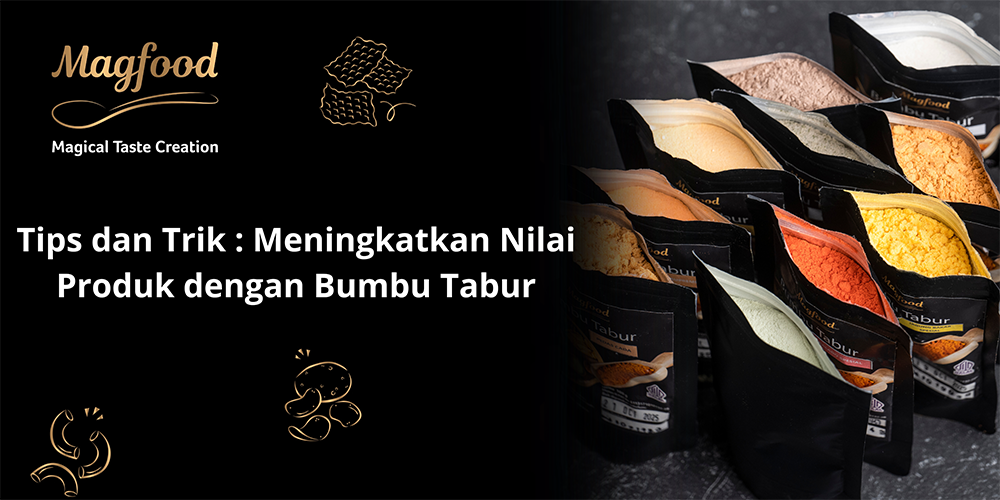
After successfully mastering the technical processing stages, the next step is to boost your product’s competitiveness. This is where Magfood seasoning powder becomes a vital solution. Magfood provides various flavors perfect for fish skin snacks, such as:
- Spicy Cheese Flavor
- Premium Salted Egg
- Korean BBQ Flavor
- Japanese Seaweed Flavor
- Extra Spicy Balado
Advantages of Magfood Seasoning Powder:
- Strong and absorbing taste requiring only a minimal application amount.
- Long-lasting on dry products without clumping.
- Distinctive aroma that enhances the consumer experience.
- Perfect for both industrial and home-scale production.
By using Magfood seasoning powders, entrepreneurs save the hassle of mixing their own spices, which often leads to inconsistent tastes. Simply sprinkle the powder after the product is fried and cooled—and your crispy fish skin is ready to become a premium snack product.
Magfood: The Custom Food Seasoning Solution for Your Business
Magfood is a leading manufacturer of seasoning powders, cooking spices, and premixes. Our products are CPPOB-certified and have obtained BPOM distribution permits, Halal certifications, and HACCP certificates. Supported by a competent Research & Development (R&D) division capable of formulating high-quality recipes based on the latest trends, Magfood confidently competes with multinational corporations.
Magfood food seasonings can be custom-formulated to achieve the exact taste and price point tailored to your business needs. This ensures your food and beverage products possess a “unique flavor signature” that stands out from competitors, giving you a strong competitive advantage aligned with your brand positioning strategy.
Magfood Food Innovation
Jl. Duren Tiga Raya No. 46, Pancoran, South Jakarta – Indonesia 12760
Tel : +6221-791 93162 (ext 101) / +6221 791 95 134
magfood.com

About Author

admin
Related posts

Article
Unlocking Lifetime Halal Certification: A Guide to Internal Halal Audits for Food SMEs
Amidst rising consumer awareness of Halal products, micro, small, and medium-sized enterprises (SMEs) in the culinary sector can no longer overlook the importance of Halal…

Article
Export-Worthy Traditional Snacks: Cassava Chips as a Hot Commodity
Cassava chips are no longer just a village snack sold at night markets. In the last two decades, cassava and its derivatives have moved up…

Article
Profit from Home: The Snack Repacking Business with Seasoning Powders
In today’s digital era, a business opportunity no longer requires a massive initial investment or a physical storefront. In fact, many success stories begin right…

Article
International Flavors: Truffle, the Fragrant and Savory Gem from Italy
Truffle, the rare mushroom with a sharp and savory aroma, has been known for centuries as the “diamond of the European kitchen.” In Italy, the…

Article
From Waste to Profit: How the Circular Economy Can Revolutionize Your Food Business
In the modern economic era, the business paradigm is undergoing a major shift. If success was once measured by how many products were produced and…









Leave a reply